Topsoil Calculator
Estimate topsoil for a lawn, garden bed, raised bed, or grading project. Enter the area and finished depth to calculate cubic feet, cubic yards, estimated tons, whole bags, and cost.
Calculate Topsoil Quantity
Enter the area, finished depth, topsoil density, bag size, and extra allowance.
Topsoil weight varies with moisture, organic matter, and compaction. Confirm bulk density and bag volume with your supplier when exact ordering matters.
How to Use the Topsoil Calculator
Measure the project area, enter the finished topsoil depth, and select the options that match how the material will be purchased.
Measure the area
Enter the length and width for a rectangular lawn or bed. For a circular area, enter the diameter.
Enter depth and material details
Use the planned finished depth. Adjust the topsoil density, bag size, extra allowance, and price when those details are available.
Review and round the results
Check cubic feet, cubic yards, estimated tons, whole bags, and cost. Bag quantities are rounded up to a whole bag.
What You Need to Measure
- Length and width for a rectangular lawn or garden bed
- Diameter for a circular planting area
- Finished topsoil depth after spreading
- Supplier density for a closer weight estimate
- Bag volume or bulk price from the product label
- A practical allowance for settling and uneven ground
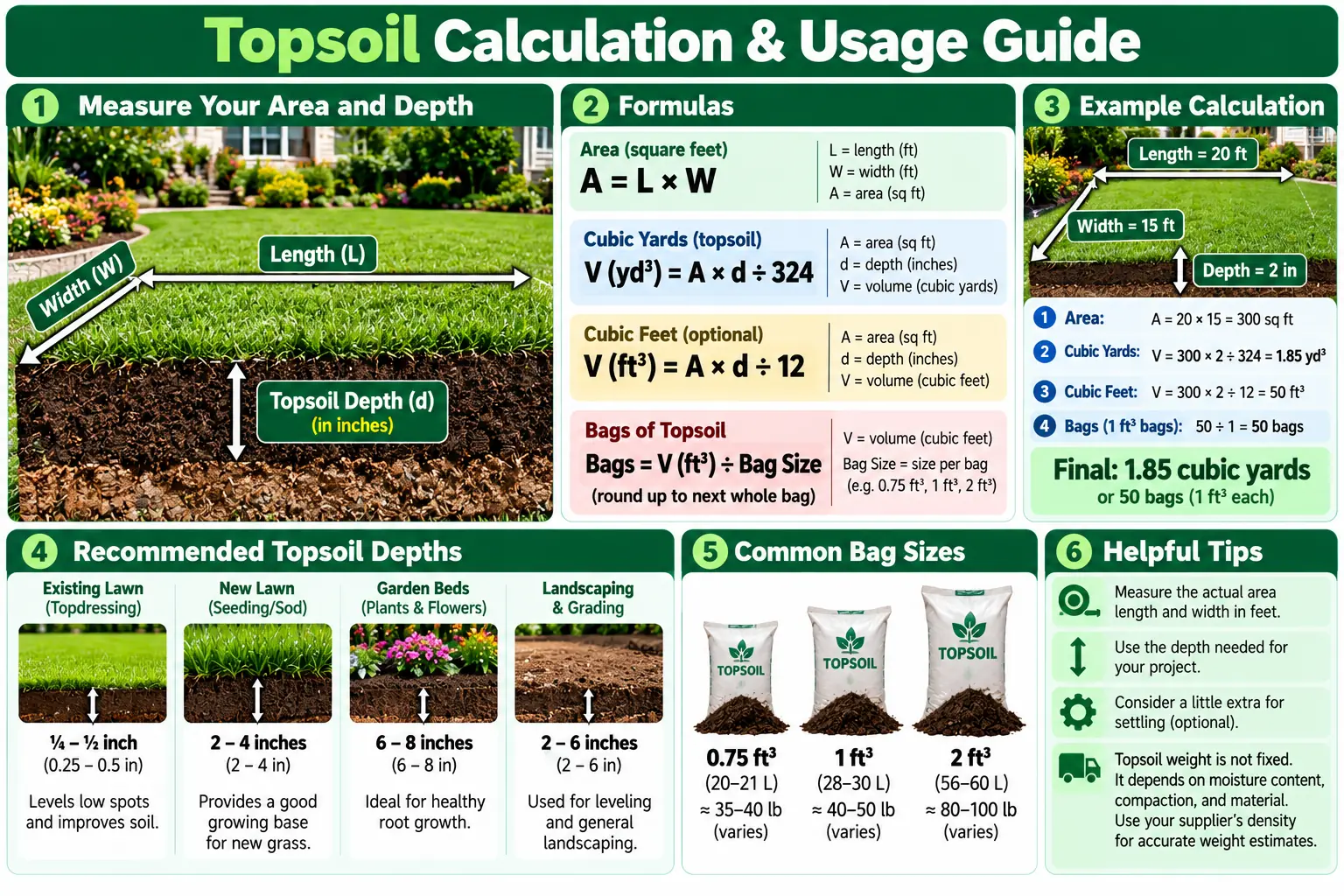
Topsoil Density and Bag Presets
These values match the calculator presets. Moisture, organic matter, screening, and compaction can change bulk weight, so use the supplier’s density and the bag label when available.
| Topsoil type | Preset tons per yd³ | Approx. pounds per yd³ |
|---|---|---|
| Screened topsoil | 1.00 | 2,000 lb |
| Dry loose topsoil | 0.90 | 1,800 lb |
| Moist topsoil | 1.10 | 2,200 lb |
| Topsoil blend | 1.20 | 2,400 lb |
| Bag size | Whole bags per cubic yard |
|---|---|
| 2 cubic feet | 14 bags |
| 1.5 cubic feet | 18 bags |
| 1 cubic foot | 27 bags |
| 0.75 cubic foot | 36 bags |
Bag counts round up because one cubic yard contains 27 cubic feet. Project results still include the selected extra allowance.
Common Topsoil Projects
Finished depth depends on the existing soil, plant roots, drainage, and project goal.
New lawns
Topsoil can improve the seedbed when existing ground is thin, compacted, or poor.
Garden beds
Added topsoil increases planting volume, but it may need compost or another amendment.
Raised beds
Measure the inside dimensions and subtract the volume of logs, rocks, or other fillers.
Low spots
Use several depth measurements when the fill thickness changes across the area.
Measurements, Assumptions, and Ordering
Measure each section separately when the site is irregular. Use the average finished depth instead of the deepest point. Bulk topsoil settles after placement, while bagged products list a nominal volume. Moisture can change weight without changing the required finished volume. Ask the supplier whether a cubic yard is sold loose or compacted and confirm delivery minimums.
Topsoil Calculator FAQ
How much topsoil do I need?
Multiply the area in square feet by the depth in feet, then divide by 27 for cubic yards. Add a small allowance if the ground is uneven or settling is expected.
How deep should topsoil be for a lawn?
The useful depth depends on the existing soil and turf plan. Many lawn projects add several inches, but a local soil test and extension guidance can help you choose the right preparation.
How many bags of topsoil are in a cubic yard?
One cubic yard contains 27 cubic feet. It equals about 14 two cubic foot bags or 18 one and a half cubic foot bags after rounding up.
How much does a yard of topsoil weigh?
Weight varies with moisture, texture, and organic content. The calculator uses an editable tons per cubic yard estimate so you can enter a supplier value.
Should I order extra topsoil?
An allowance can cover uneven ground, settling, and small measurement errors. Use the actual site condition instead of adding a large amount automatically.
Can topsoil and garden soil be used the same way?
Not always. Products differ in mineral soil, compost, fertilizer, drainage, and intended use. Check the product label and choose material suited to the plants and location.