Plan Your Yard With Clear Numbers
Use My Yard Calculator to estimate gravel, mulch, soil, stone, seed, landscape rock, plant spacing, and retaining wall materials.
Enter real project measurements, review the assumptions, and get practical quantities before you order.
Quick Cubic Yard Calculator
Estimate volume, weight, bags, and material cost.
Weight depends on material type, moisture, grading, and compaction. Confirm the final order with your supplier.
Ten Focused Calculators for Yard Work
Each calculator is designed around a specific purchase or layout decision. Use the tool that matches your material instead of relying on one fixed density or one general answer.
Gravel Calculator
Estimate cubic yards, tons, coverage, waste, and cost for gravel projects.
→Mulch Calculator
Calculate bulk mulch volume, bag quantity, coverage, and price.
→Stone Calculator
Find stone volume and estimated weight from area and depth.
→Soil Calculator
Plan soil for beds, gardens, lawn work, and landscape areas.
→Topsoil Calculator
Convert square footage and depth into yards, bags, and cost.
→Dirt Calculator
Estimate fill volume, weight, compaction allowance, and price.
→Grass Seed Calculator
Calculate seed pounds and bags for a new lawn or overseeding.
→Landscape Rock Calculator
Plan decorative rock volume, weight, coverage, and spending.
→Plant Spacing Calculator
Estimate plants, rows, spacing layouts, and plants per acre.
→Retaining Wall Calculator
Estimate blocks, courses, base material, backfill, and cost.
How the Yard Calculator Works
The calculation starts with measurements you can take using a tape measure. Results are estimates for planning and ordering, with every important assumption shown.
Measure the area
Record the length and width of a rectangle. For a circle, measure the radius or diameter. Divide an irregular space into smaller shapes and add their areas.
Choose the depth
Enter the planned material depth in inches, feet, centimeters, or meters when the selected tool allows it. Use the installed depth required for your actual project.
Review the result
Check cubic feet, cubic yards, weight, bags, waste, and cost. Read the density and rounding notes before placing an order with a landscape supplier.
How to Calculate Cubic Yards
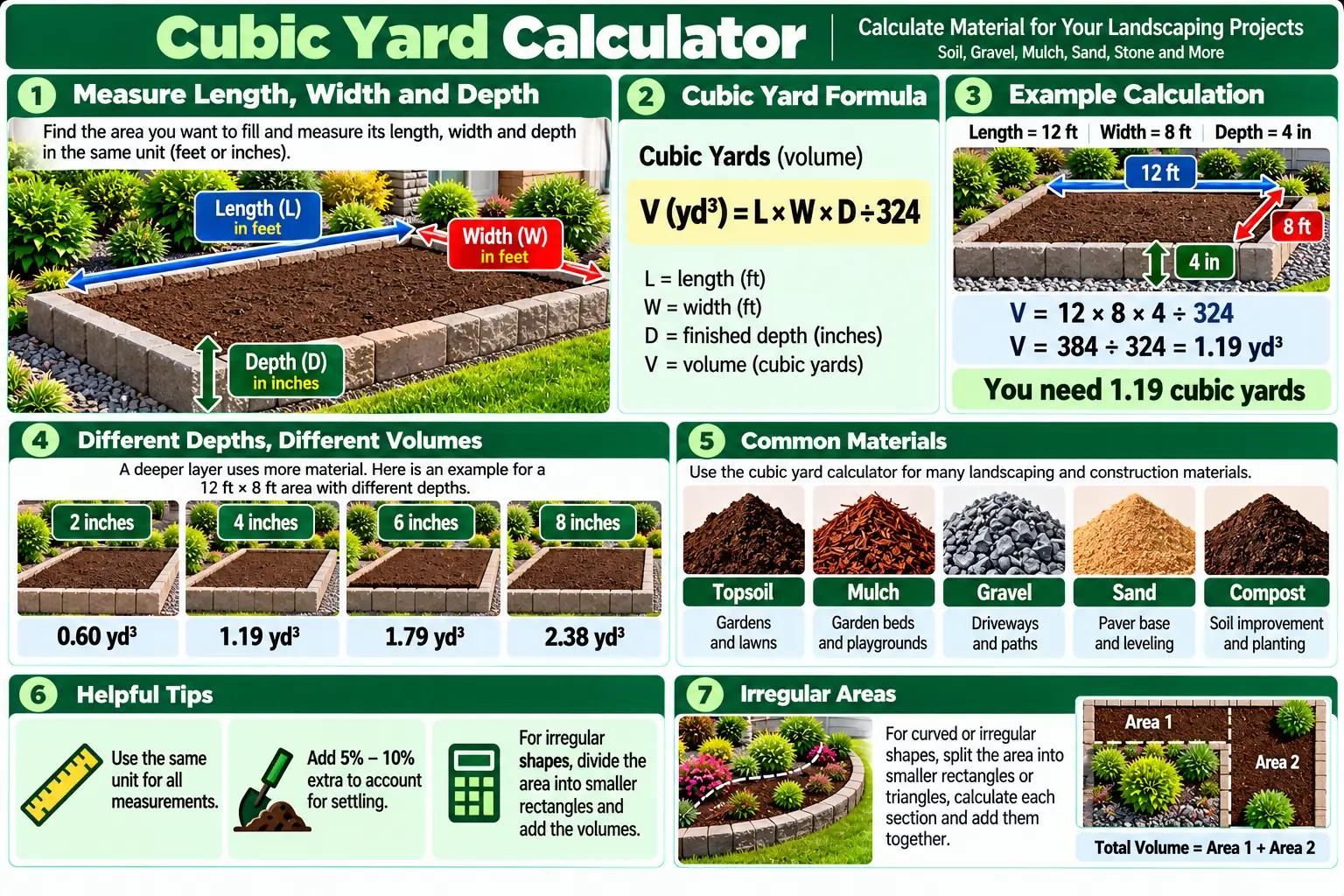
Landscaping materials are often sold by volume. A cubic yard is a volume that measures one yard long, one yard wide, and one yard high. It contains 27 cubic feet.
For a rectangular area measured in feet, multiply length by width to get square feet. Convert the depth from inches to feet, then multiply the area by depth. Divide the cubic feet by 27 to convert the result into cubic yards.
Plan Materials Before You Buy
A reliable yard calculator should answer the purchasing question behind the measurement. My Yard Calculator connects area, depth, density, package size, waste, and local price so the result is useful at the store or supply yard.
Landscaping and gardens
Estimate mulch for garden beds, topsoil for lawn repair, soil for planting areas, decorative rock for borders, and plant quantities for a planned spacing pattern.
Driveways and paths
Estimate gravel or stone for a driveway, walkway, patio base, drainage area, or other hardscape project using the correct dimensions and material depth.
Walls and site work
Plan retaining wall blocks, rows, base material, drainage backfill, fill dirt, and related quantities. Structural safety and local code decisions still require a qualified professional.
What Makes an Estimate Reliable?
The math can be exact while the final order remains an estimate. Measurements, material density, moisture, compaction, waste, and supplier rounding all affect the quantity delivered to a project.
Measure more than once, use the depth required by the project, and choose the closest material type. Check whether your supplier sells by volume, weight, pallet, or bag. For large or costly work, ask the supplier or contractor to confirm the estimate.
Our calculators show the formula, units, assumptions, and rounding method wherever they affect the answer. Reference tables are built from the same calculation rules used by the tools so examples remain consistent.
One Result, With the Details You Need
Some visitors need cubic yards. Others need tons, bags, pounds of seed, plant counts, wall blocks, or an estimated cost. Each page focuses on the result that matches its material and project.
The main calculators keep closely related unit and output questions together. This prevents thin pages that repeat the same formula. Separate guides are reserved for projects with different measurements, materials, or decisions.
Use the quick yard calculator for an early estimate, then open the dedicated material calculator for density choices, coverage guidance, cost inputs, examples, and project specific notes.
Yard Calculator FAQ
How many cubic feet are in a cubic yard?
One cubic yard contains 27 cubic feet. This comes from multiplying 3 feet by 3 feet by 3 feet.
How do I calculate cubic yards from square feet?
Multiply square feet by the material depth in feet to get cubic feet. Divide that result by 27. If depth is measured in inches, divide the inches by 12 before multiplying.
How much extra material should I order?
The right allowance depends on the material and project. Uneven ground, spillage, settlement, and compaction may increase the needed amount. Review the project conditions and confirm the order with the supplier.
Why is material density important?
Density converts volume into estimated weight. A cubic yard of mulch does not weigh the same as a cubic yard of gravel. Moisture and material grading can also change weight.
Can I use the calculator for an irregular yard?
Yes. Divide the space into rectangles, circles, or other simple shapes. Calculate each section and add the volumes. Use the dedicated calculator when it supports multiple areas.
Are these estimates suitable for structural work?
The tools support planning and material estimates. They do not replace engineering, soil evaluation, permits, building codes, or advice from a qualified contractor or engineer.
Measure Once. Plan With Confidence.
Start with the material that matches your project and get a clear estimate before you contact a supplier.
Use the Quick Calculator